The Power of the Pause
What happens when high-achieving women step away — and step back into themselves
Read more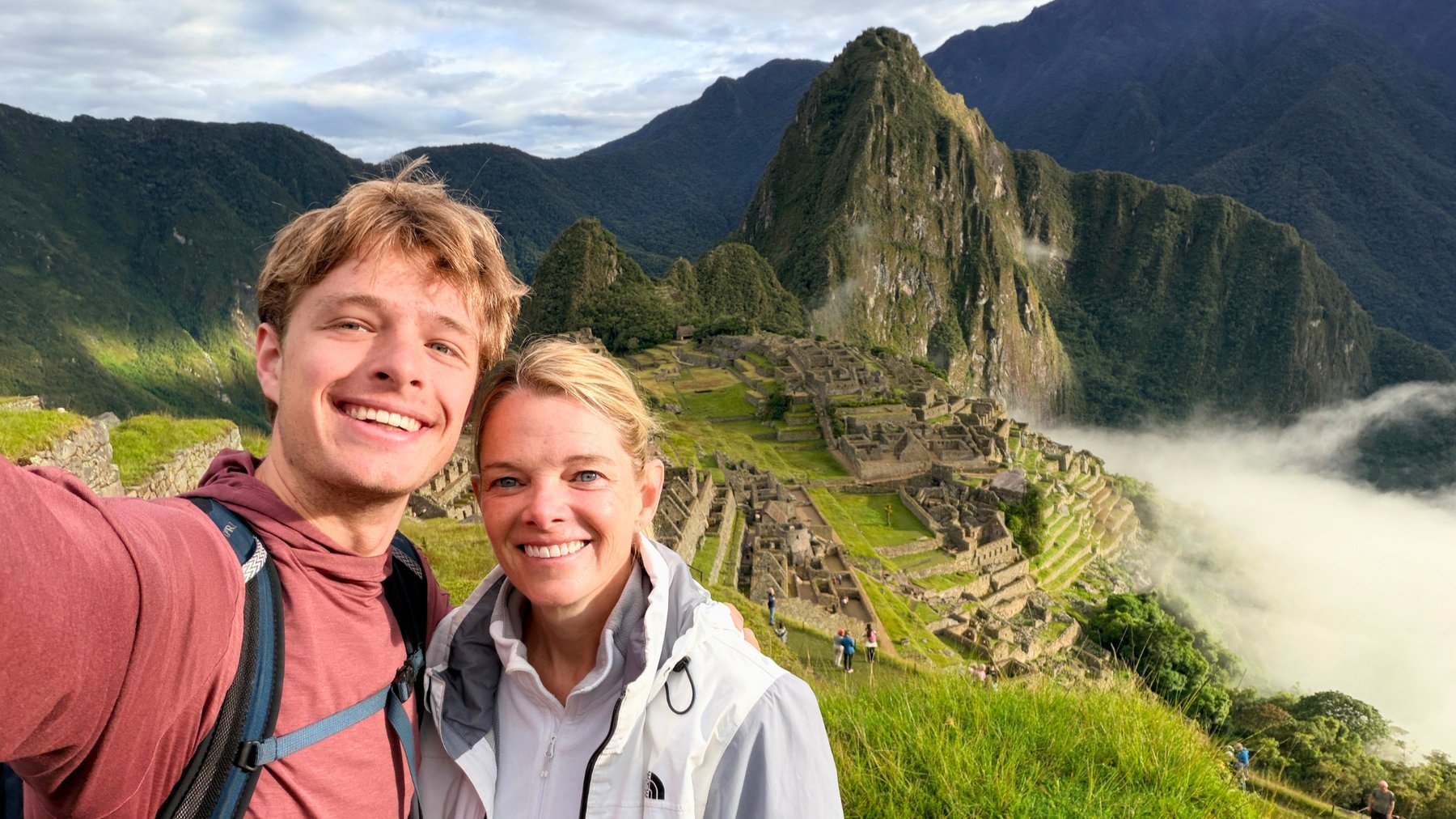
Five days. Forty-five miles. 15,000 feet. And a son who kept looking back to make sure I was still there.
When Zane was ten, I made him a deal. Stick with Spanish. Keep your grades up. And one day, I’ll take you anywhere in the Spanish-speaking world you want to go. He chose Machu Picchu.
Now he’s on a gap year in South America. A few months ago, he called and said, “You’re coming to Peru. We’re finally doing this, right?” And just like that, a promise made to a ten-year-old became five days on the Salkantay Trek.
Not subtle ones.
You didn’t train enough. You’re going to be the slow one. You’re going to hold everyone back.
I joked more than once that Zane might have to strap me to a llama to get me over the mountain. And sitting in the pre-hike briefing, I caught myself scanning the room, quietly and a little shamefully, looking for who might be slower than me.
Not my proudest moment. But a very real one.
And almost immediately, something shifted. Not because it got easier. It didn’t. But because the noise in my head, the comparisons, the what-ifs, the quiet ranking of where I stood, stopped mattering in the same way.
At altitude, there’s no faking it. You don’t really get to power through. You don’t get to prove anything.
You just take the next step. Slowly. Intentionally. In rhythm with your breath.
And everyone else is doing the exact same thing.
No one is sprinting to 15,000 feet. Some people who looked incredibly strong struggled the most with altitude sickness. Others just kept going, steady and consistent, in their own rhythm.
It didn’t mean anything about who was stronger.
And somewhere in there, I realized something.
Your breath. Your pace. Your energy. That’s what gets you through. And the more I’ve thought about it since, the more I realize that’s true far beyond the mountain.
Not at the summit. The summit was almost anticlimactic.
The hard part was the descent.
It started to rain. My hands went numb, the can’t-feel-your-fingers kind of numb. I felt nauseous. And they kept saying the lunch spot was just ahead, which I’m fairly certain means something different on a mountain.
I remember thinking: I don’t know if I can do this.
Not the whole trek. Just this next stretch.
And there was no big decision to make. No pep talk. No surge of motivation.
Just a quiet knowing: Don’t stop.
Because I could feel, instinctively, that if I stopped, it would be very hard to start again.
My mind was telling me I couldn’t do it. My body had already decided that I could.
Zane has been traveling in South America for three months. His Spanish is better than mine. He moves through uncertainty more easily than I do. He’s comfortable with plans that haven’t been made yet.
And I could feel that, not in a big way, but in small moments.
The way he talked to our guides. How naturally he set a pace. How easily he moved through what felt unfamiliar to me.
I was still his mom. But the role had changed—less leading, more following.
There was a part of me that wanted to step back into what was familiar. To take over. To lead in the way I always had.
But I didn’t.
I let him lead. I paid attention to who he is now, not who I was used to him being.
And what surprised me most is that I didn’t feel diminished. I felt proud, curious, a little in awe.
That’s when it clicked for me.
We hold onto the version of the relationship that worked before, even when the people in it have changed.
He led, but he didn’t pull me. Every so often, he turned and looked back, just to make sure I was there.
That small gesture, repeated over five days, said everything.
I stopped trying to win.
My default is to go out too fast. To keep up. To prove I can do it.
This time, I paid attention to what I could actually sustain. Not what looked good. Not what anyone else was doing.
Just what I could keep doing for hours.
And I let that be enough.
At Humantay Lake, 13,000 feet, thinking I’ve never been this high.
At the pass, which felt less triumphant than I expected.
At the end of day two, after 20 miles and something like 42,000 steps, when “done” felt less like victory and more like relief.
Each one landed differently than I imagined.
It wasn’t triumphant. It was quieter than that.
I stood there looking out at something so expansive, so historic, so improbable. I wasn’t thinking about the miles or the elevation or even the hike.
I was just thinking: What a gift.
That I got to do this. That my body carried me here. That I got to stand in this place.
And more than anything, that I got to do it with him.
Look around.
Not because it was easy. It wasn’t.
There was exhaustion. Some complaining. A lot of effort.
But every time I lifted my head, I saw it. The mountains. The stillness. The sheer improbability of where we were.
And I had to remind myself of something I think we all forget.
You can achieve the goal and still miss the experience if you don’t stop long enough to see where you are.
And it did.
But the deeper test wasn’t physical.
It was whether I could stay with myself when it was hard. When comparison crept in. When I wanted to lead instead of follow. When every signal said to stop.
Self-trust is built there.
Not by pushing harder. Not by being certain.
Not just getting to the top.
Becoming someone who trusts themselves enough to take the next step.
At Machu Picchu, Zane turned and looked back at me one more time.
I was right there.
Right where I was supposed to be.
What happens when high-achieving women step away — and step back into themselves
Read more
The Vamonos Experience 2026—Reimagine Your Future women’s retreat will take place in Oaxaca, Mexico, from February 28 to March 6, 2026. Here is a list of Frequently Asked Questions…
Read more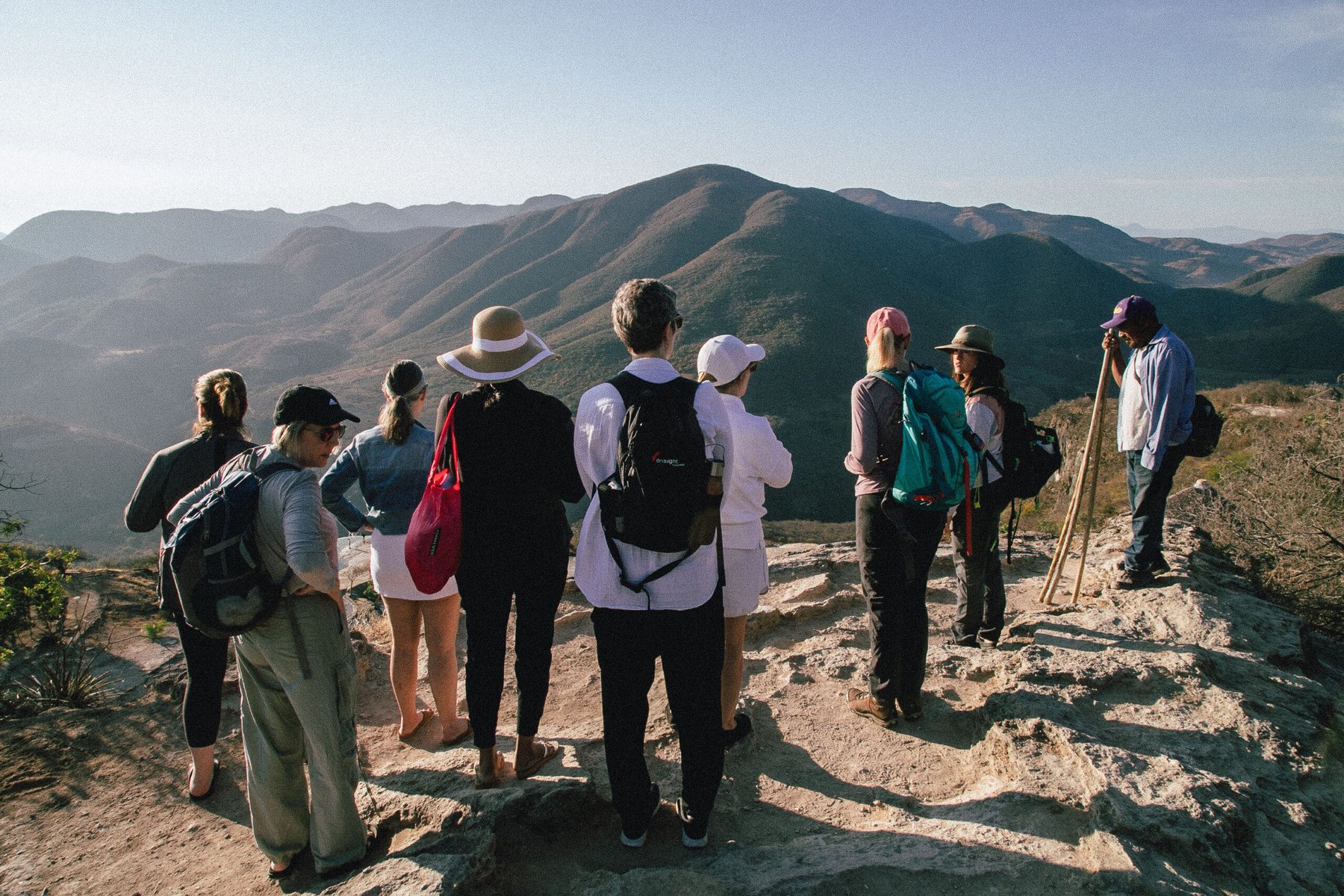
Whether hiking through the mountains of Oaxaca swimming beneath waterfalls, or simply watching the sunrise over the Tlacolula Valley, we were constantly reminded that nature doesn’…
Read moreBook a free discovery call to see if working with Suzanne is right for you.