She Has a Seat at the Table. She’s Leaving Anyway.
Recently I talked with a woman I coached about a year ago. She had a seat at the table, and she wanted to use it for something that mattered. This year she reached out to re-engage…
Read more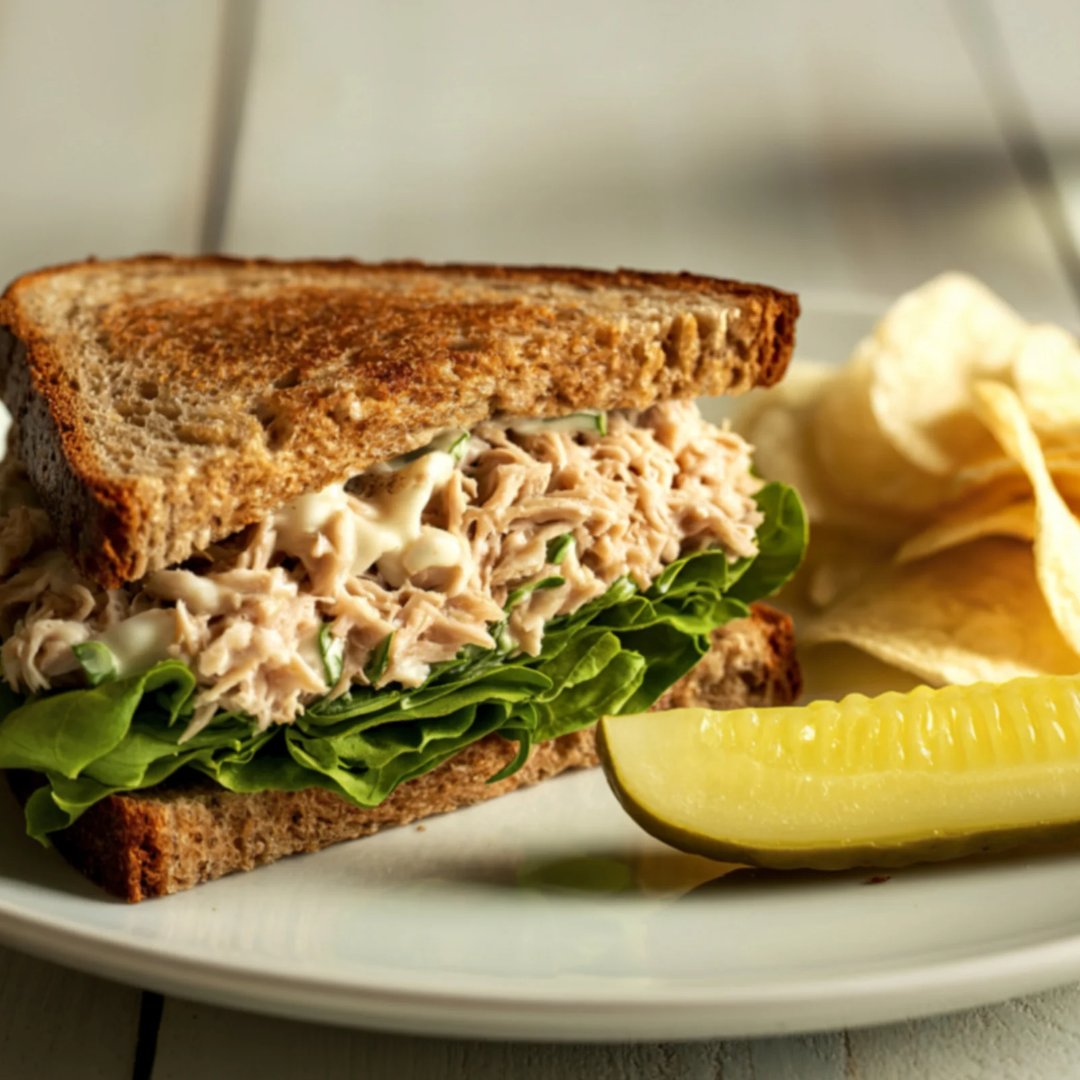
Back in my corporate days, a group of us were stuck on a complex model for a client. We couldn’t pin down what the real challenge was, or how the technology and the regulations fit together. Several smart people, a lot of hours, and no answer.
Then I went to make a tuna fish sandwich.
Somewhere in the middle of making it, the answer arrived. I remember thinking, oh my God, that’s it. I ran back and called the team. They wanted to know how I had come up with it, and I had to admit the truth. I was making a tuna fish sandwich.
It became a running joke on our team. When something was really hard and nobody could see a way through, the advice was simple: go make a tuna fish sandwich.
It turns out the joke was onto something.
The tuna sandwich moment has a name. Psychologists call it incubation; I prefer to call it marination, if we stick with the cooking metaphor. A pause can allow you to creatively see a solution to a problem that has been staring you in the face. It can also show what’s quietly draining you, and what’s actually giving you energy.
When I stepped away from my partner role and spent a year in Oaxaca, what I noticed most was what was driving me. I’d spent a long time noticing that I was burned out, but not being able to see my way through it.
While I was in Oaxaca, I facilitated a two-day strategy session for a nonprofit called EnVía, an organization that offers micro-finance loans to women in indigenous Oaxacan villages. I ran it entirely in Spanish. It was some of the hardest facilitation work I have ever done, and it took real courage to walk into that room and try to speak Spanish.
I came home from it excited and bouncing with energy. I was making a difference, and the work lined up with my values. I also saw that I could do really hard things and push myself.
And I noticed something else. My burnout wasn’t caused by working hard. It was caused by doing work that was draining my energy rather than refueling me. There is a real difference. I hadn’t realized how draining some of what I’d been doing was, because I had never given myself permission to stop and ask what gave me energy and what took it. The pause gave me that permission.
The Power of the Pause isn’t about leaving your job or blowing up your life. It’s about creating enough space to hear yourself, then bringing what you hear back into your work. Leadership and life can’t be fully separated, and the clarity you find in one shows up in the other.
You don’t have to take my word for it. Researchers have studied this for decades, and the evidence is encouraging. Here is what the studies show.
Here is the part I want to be careful about. None of this says that doing nothing produces ideas. The research is more specific, and more useful.
Preparation comes first. The incubation effect was larger when people had spent longer working on the problem before stepping away. You have to engage with the question before the pause can do its job. A pause doesn’t replace effort. It lets effort pay off.
The best breaks aren’t passive. In the Santa Barbara study, an easy task beat a demanding task, plain rest, and no break at all. A walk, a simple chore, or a stretch of unhurried time may serve you better than another hour of grinding at the same problem.
The pause is not the whole process. The mind that wanders and the mind that decides work as a team. You still have to come back, notice the idea, and do something with it.
So a pause is not an escape from the work. It is a working part of how good thinking happens.
I believe in the Power of the Pause, and it’s why I built A Pause for Possibilities. It’s a six-day retreat for eight women at Casa Lyobaa in Oaxaca, Mexico, from February 20 to 26, 2027, co-facilitated with my dear friend Kimberly. The group is small on purpose, so no one gets lost in the crowd.
There is coaching, and there is adventure, and there is a lot of unhurried space in between. Nobody is asking you to produce anything. The idea is to give your mind the kind of room the research describes, and to see what shows up.
If that sounds like what you’ve been needing, I’d love to have you join us.
Suzanne Roske is a leadership and life coach, speaker, former PwC partner, and founder of Vamonos Executive Coaching. She helps high-achieving women, executives, and leadership teams reconnect with themselves and lead with greater intention.
Recently I talked with a woman I coached about a year ago. She had a seat at the table, and she wanted to use it for something that mattered. This year she reached out to re-engage…
Read more
When I was a kid, I loved imaginary play. There was an entire summer when I was obsessed with the show “Flipper,” and I spent my mornings pretending I had a pet dolphin. But at som…
Read more
I’ve been thinking about AI a lot recently. Which isn’t news, because who isn’t? But what I keep coming back to is leadership. Specifically, what AI demands of the humans still in …
Read moreBook a free discovery call to see if working with Suzanne is right for you.